Two of Four Finalists Had Names but No Faces
Two finalists were named over a 1.7-second shot of hands, leaving their faces unestablished when a later ruling named them.
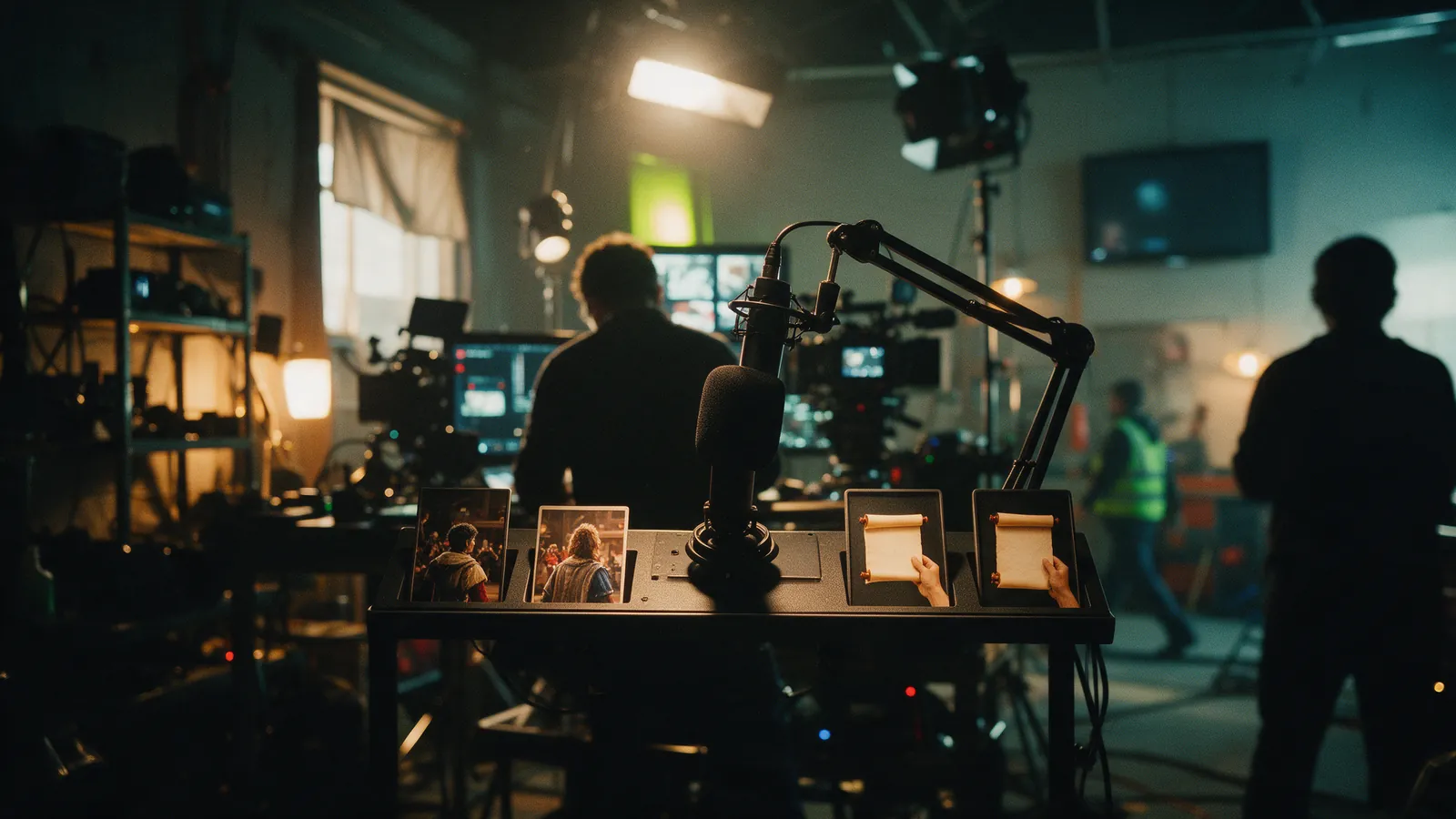
At 1:38 in BORROWED WOUNDS, I introduce two of the four finalists over a 1.7-second shot of hands holding a scroll.
The announcement names Sagi Ryo and his Life Bond, Tabe Ino. The picture supplies neither face. Later, at 6:02, the ruling names those same two characters. That is when the audience needs to know who they are hearing about.
I had supplied names. I had not supplied a clear visual introduction.
The information was present
The reasonable argument for that introduction is that dialogue can establish a character. A name spoken aloud is information. An announcement can also explain a relationship: Sagi Ryo has a Life Bond, and that person is Tabe Ino.
I do not think every named character needs a separate portrait. Nor do I think every announcement needs to cut directly to its subject. Those would be rules I could follow without asking what the scene needs.
But this scene needs something specific. It needs to prepare the audience to identify two people when a later ruling concerns them.
My edit does not give those people the same introduction it gives the Mabe pair. The Mabe pair receives faces. Sagi Ryo and Tabe Ino receive hands and a scroll.
That difference is visible in the cut. It does not depend on whether I like the composition or think the announcement sounds clear.
A name cannot identify a withheld face
The mistake is easy for me to describe now: I treated a spoken introduction as a completed introduction.
Those are different things in this scene.
The announcement establishes that Sagi Ryo and Tabe Ino exist. It establishes their names and the Life Bond relationship. But the shot does not establish which faces belong to those names.
I can know the characters and still fail to put that knowledge into the edit. My familiarity with them does not make their faces available to someone watching the film.
That is the distinction I need to preserve when reviewing an introduction. “Did I name this person?” checks the dialogue. “Can the viewer connect that name to this face?” checks the relationship between the dialogue and picture.
For these two finalists, my answer to the first question was yes. The second question exposed the failure.
The later ruling sets the requirement
I would read the opening differently if the names had no later demand placed on them. Here, I can trace that demand to an exact moment: the ruling at 6:02 names the same two people whose faces were withheld.
That makes the earlier omission consequential.
The cost is a missing identification step at a point where the film needs recognition. The audience has been given the names, but the introduction has not attached them to faces.
I do not have a viewer confusion percentage to report. I do not need to turn this edit diagnosis into a claim that every viewer missed the ruling. The narrower finding is sufficient: the cut asks for a connection that this introduction did not provide.
The numbers keep me honest. Two of four finalists. A 1.7-second shot. An introduction at 1:38. A ruling at 6:02 that names the two without faces.
That is more useful to me than calling the scene unclear and leaving the diagnosis there. It identifies which characters lack something, what is missing, and where that missing information becomes necessary.
Duration and subject are separate choices
The review identifies two editing fixes: extend shot 14, or put faces where the hands currently appear.
I regard those as proposed repairs, not evidence that a revised version has solved the problem. Their value is that both address the introduction through the edit.
Still, the distinction between duration and subject matters. A longer introduction needs to make the relevant faces available. More time spent withholding the same information would not satisfy the requirement I have identified.
The question is not simply whether 1.7 seconds feels short. It is whether the picture lets me connect Sagi Ryo and Tabe Ino to the people the later ruling names.
I want the repair to answer that question directly.
I also do not need to remove the scroll from the film to make this argument. The failure concerns what occupies the screen during these names. A useful image can still be the wrong image for a particular piece of dialogue.
Check what the audience must recognize
My position is not that spoken names are weak introductions. They can carry useful information. My position is that I cannot count a name as visual identification when I have withheld the face.
For this scene, the later ruling provides the test. I can work backward from the moment of required recognition and ask whether the earlier edit supplied its basis.
That is a smaller, clearer task than deciding whether the whole introduction feels cinematic. It is also a task with an observable answer in the footage.
Today, find one later line that names a character in your film. Then inspect that character’s introduction and check whether the name and face actually meet on screen.
The easy post agrees with everybody. This one didn't, and some days the thing I argue against is my own work.