Combine the Best Face and Outfit Into a Single Reference Image
Select the strongest face, outfit, and framing from separate generations, then merge them into one reusable master reference.
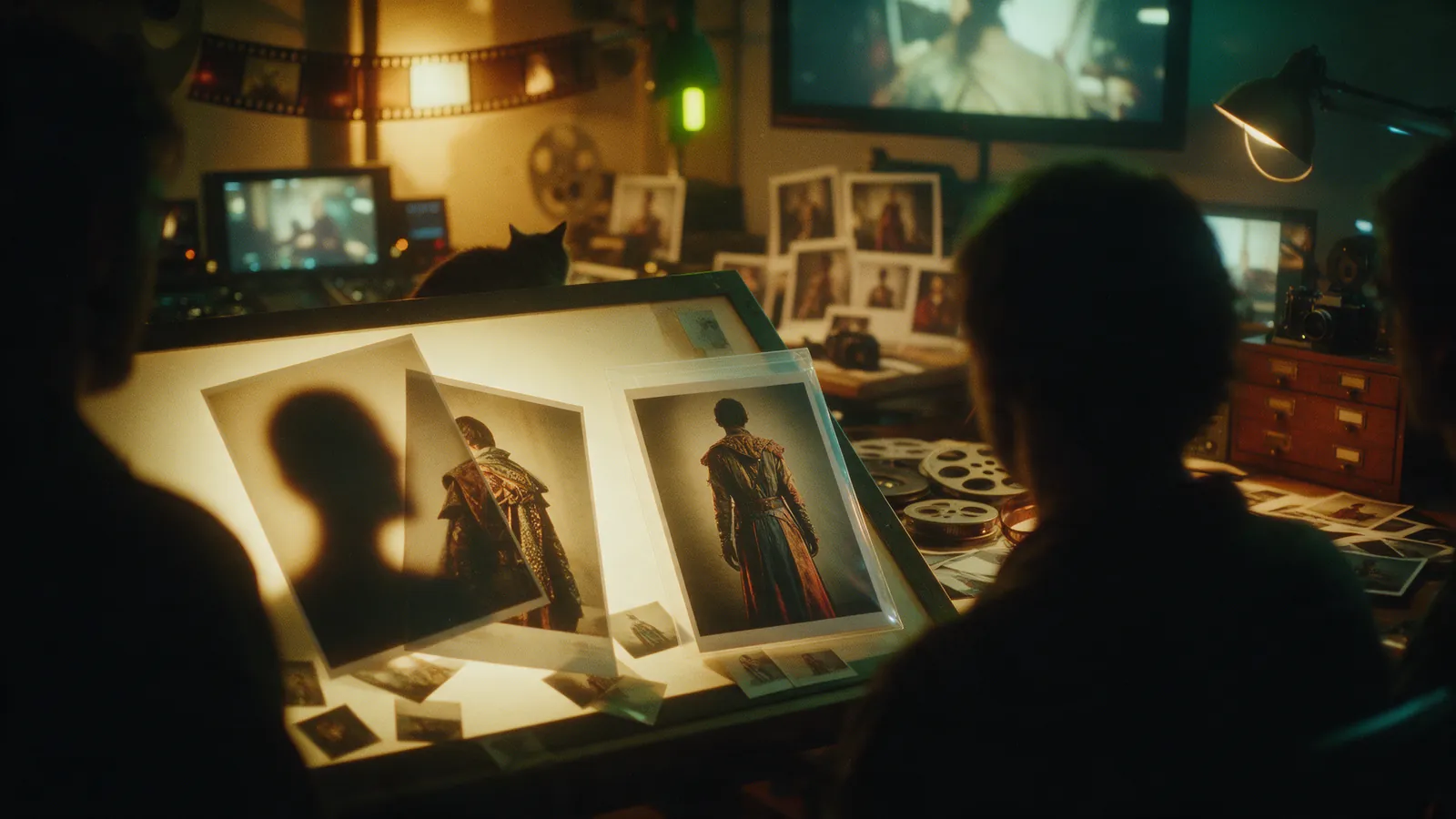
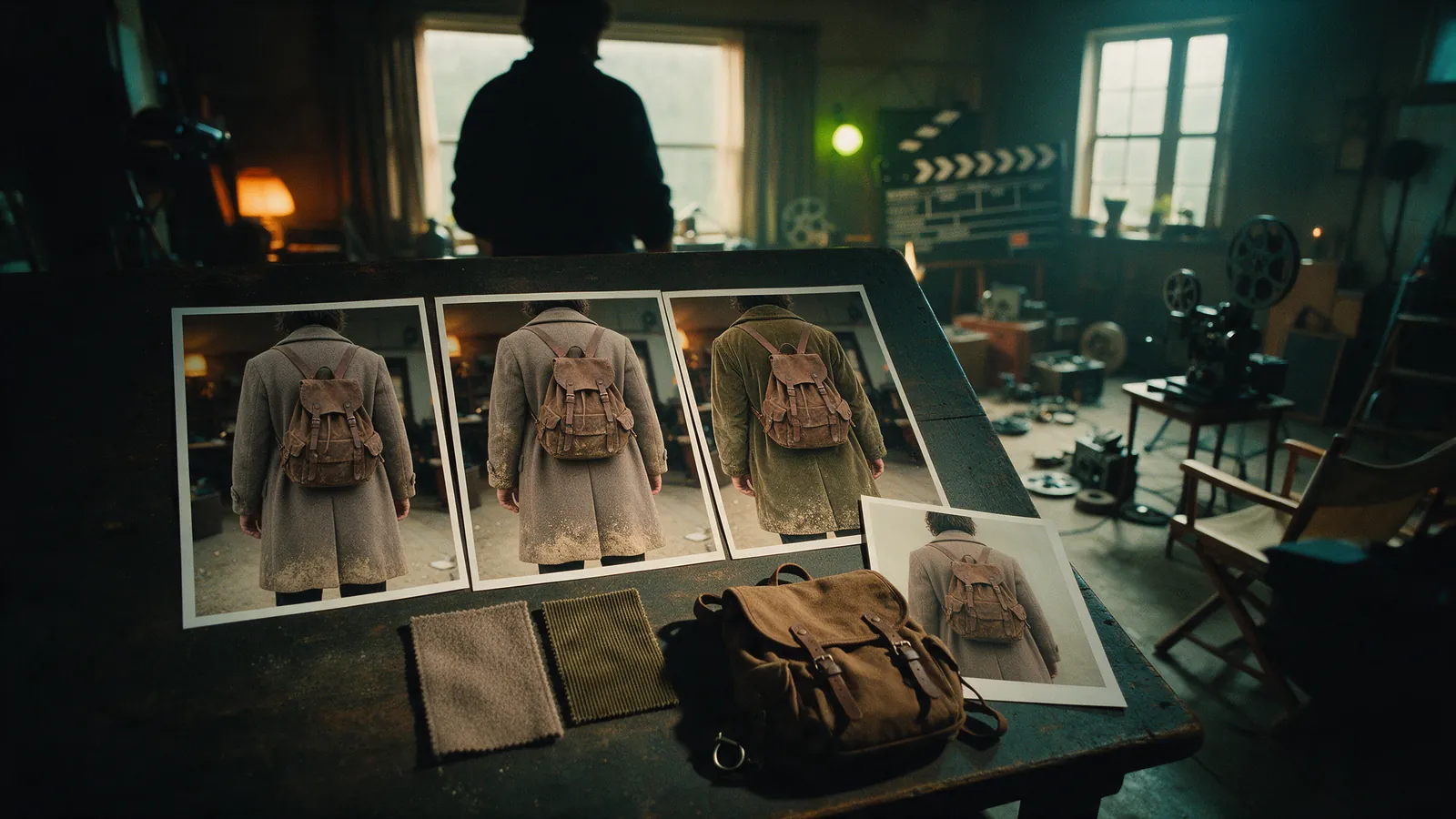
One generation had the right face. Another had the right outfit.
Neither was the complete reference.
The mistake would have been to keep generating in search of a single lucky result that got the face, clothing, and framing right at once. The studio method is to combine the successful attributes into one master image with nano_banana_2.
The stable master asset comes from consolidation, not from waiting for a perfect first render.
Stop judging every candidate as all-or-nothing
A generation can fail as a complete reference and still contain an approved part.
The face may be right while the outfit is wrong.
The outfit may be right while the face is wrong.
The framing may succeed in an image that misses another attribute.
I review those attributes separately.
This changes what “failed generation” means. I do not have to promote the whole image into the reference set. I also do not have to discard the part that worked.
I can select the successful face from one candidate and the successful outfit or framing from another.
Done right, each chosen candidate has a named contribution to the future master asset.
Identify the successful attribute
Before blending anything, I state what each source image contributes.
One image is the face source.
Another is the outfit source.
If framing is the successful attribute, I identify which image provides it.
I avoid vague judgments such as “this one feels better.” The consolidation needs a clear selection. The chosen face, clothing, and framing must be known before the master is created.
This also keeps me from asking the blend to decide which features matter. That decision belongs to me.
Done right, I can point to every source candidate and name the approved element it contributes.
If two candidates both have strong faces but neither has an approved outfit or framing, the set has not yet supplied the combination described by the method. More variations are not automatically useful. The sources need complementary successes.
Keep the selected attributes separate from the source images
The source images are not the final authority as whole images.
Their approved attributes are.
That distinction matters when one candidate contains the correct face but an unsuitable outfit. If I treat the whole candidate as approved, its incorrect clothing can follow it into later work. If I reject the whole candidate, I lose the face that succeeded.
The master-asset method avoids that false choice.
I approve the face from the first image.
I approve the outfit from the second.
I approve the framing from whichever candidate got it right.
Then I ask for one consolidated image containing those selected parts.
Done right, the decision is attribute-based. The source candidates remain evidence for the choices, while the future master becomes the combined reference.
Use nano_banana_2 for the blend
I use nano_banana_2 for this consolidation.
The task is to fuse the successful parts of separate generations into a single master image.
This is not another attempt to generate the character from scratch. The inputs already contain approved information. The blend is responsible for bringing that information together.
I provide the face source and the source for the outfit or framing. I define which attribute comes from each.
The desired output is singular: one master image.
Done right, the result carries the selected face, clothing, and framing into one reusable reference.
The value of the operation is consolidation. Several partial successes become one base asset.
Review the face first
The master cannot pass if it loses the chosen face.
I compare the blended result with the source selected for facial identity. The question is not whether the new face is attractive. The question is whether it carries the face that was already approved.
If the blend produces a different face, it has replaced the successful attribute instead of consolidating it.
That output does not become the master.
I treat the face as one of the elements that can be right in an otherwise incomplete generation. The consolidation should preserve that success.
Done right, the master image contains the chosen face, not a new compromise face.
Review the outfit second
Next, I compare the master with the chosen outfit source.
The clothing was selected because that candidate solved the outfit. The blend needs to carry it into the same image as the approved face.
If the clothing changes into another version, the consolidation has not completed its job.
I do not accept the image merely because the face survived. The purpose of the master is to unite the chosen attributes. Preserving only one of them leaves me with another partial success.
Done right, the approved face and approved outfit now exist together.
Review the framing
Framing can also be the successful contribution from one of the candidates.
If a selected composition or crop is part of the consolidation target, I compare the output with that source as well.
The master image must carry the chosen framing rather than inventing another presentation.
This is easy to overlook because face and clothing draw more attention. Yet framing is also an attribute that one generation may get right.
Done right, the master has all selected parts in the intended presentation.
Approve one master, not a committee of references
Before consolidation, the partial candidates have separate uses.
After consolidation, the new image becomes the base reference for the rest of the piece.
That is the master asset.
Its job is to place the approved face, clothing, and framing in one image so later work can begin from a stable reference rather than repeatedly choosing between conflicting candidates.
I do not keep asking later generations to take the face from one image and the outfit from another. That decision has already been resolved in the master.
The master becomes the base.
Done right, later work receives one consolidated reference image.
Do not wait for the perfect one-shot render
I reject the idea that stability must come from a perfect first attempt.
Separate generations often solve separate attributes. One gets the face. Another gets the outfit or framing. The master asset is built by combining those successes.
That is a different acceptance model.
A candidate does not have to be perfect to contribute.
The consolidation does have to be complete.
This lets me stop treating generation as a repeated lottery for a single flawless image. I can recognize good parts, select them, and combine them into the asset the project needs.
The master is not approved because it is the newest result. It is approved because it carries every chosen attribute into one image.
What the consolidation costs
I use nano_banana_2 for the blending operation, but I never logged a monetary price or a fixed number of renders.
The procedural cost is one consolidation task after the successful attributes have been selected. I do not add a price estimate because I never logged one.
The cost this method is designed to avoid is continued searching for a perfect render in one attempt. Instead, the method uses the successful material that already exists.
That does not mean every blend passes. The master still needs to preserve the chosen face, outfit, and framing. If it drops one, it remains incomplete.
The final acceptance test
I approve the master only when I can answer yes to each relevant question.
Does it contain the selected face?
Does it contain the selected outfit?
Does it preserve the chosen framing?
Is it one image that can serve as the base reference for the rest of the piece?
If any selected attribute is missing, the result is not the master asset.
If all selected attributes are present, I stop returning to the separate candidates for routine reference. Their useful parts have been consolidated into the approved base.
Today, review two character candidates that each got something right. Name the successful attribute in each before asking for another fresh generation.
A method is what still works on the morning inspiration doesn't show up.