I Asked for a Clock Without Hands and Got Hands and Numbers
My prompt asked for a clock without hands. The fix was to describe the surface replacing them instead of naming them.
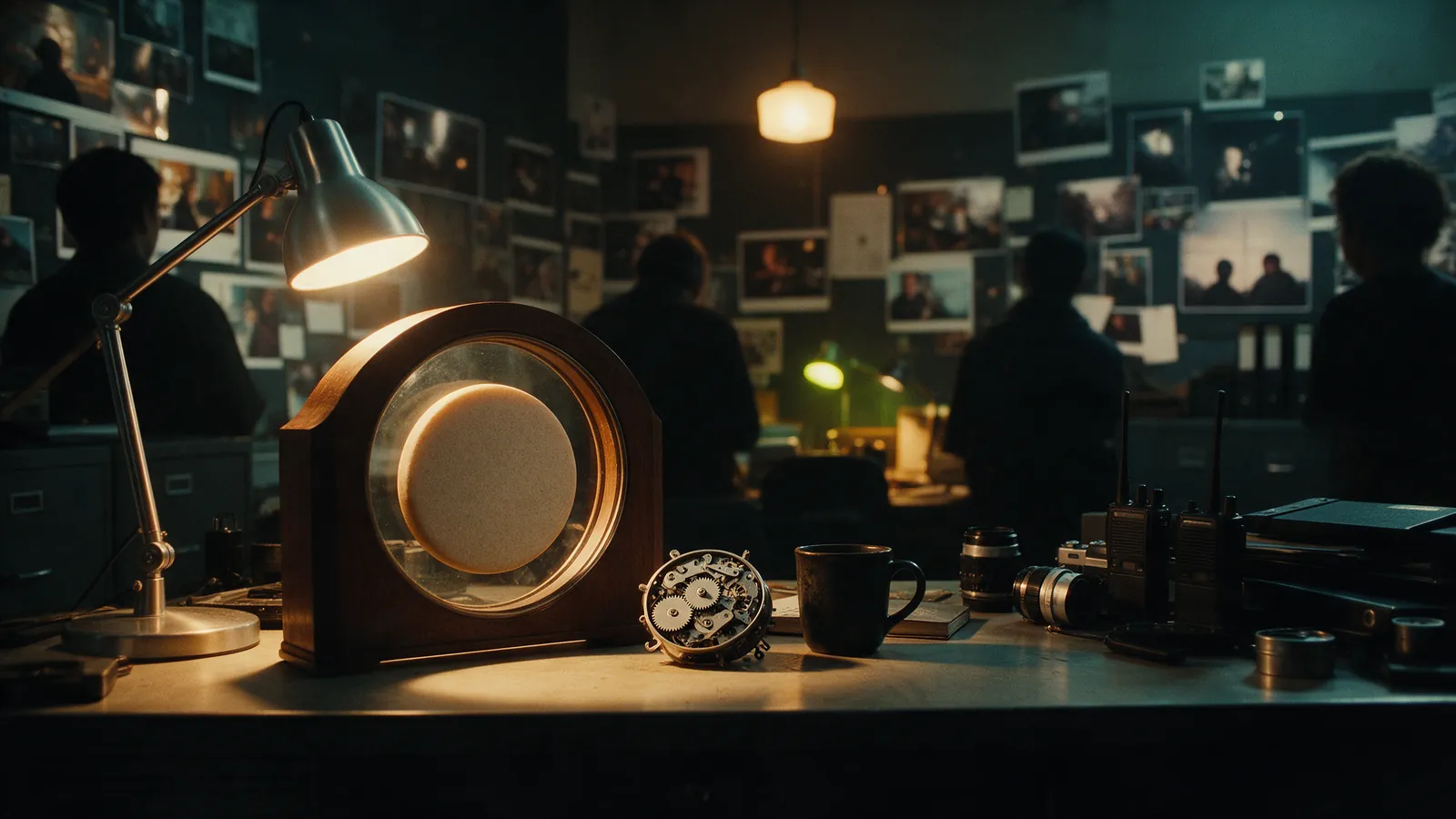
empty dial with no hands gave me a clock face with hands and numbers.
The prompt named the exact objects I wanted removed. The image put them back.
This was not a strange exception limited to clocks. The same pattern appeared when a prompt said No horns, no wings, no glow. Those three nouns defined the familiar fantasy creature the prompt was trying to avoid, so they became an invitation to draw all three.
The mistake was treating an image model as if it removed objects from a checklist.
It was responding to the visual concepts I supplied.
The model drew the clock it knew
A clock without hands is an absence. The model still has to turn that absence into pixels.
My wording gave it a clock, a dial, and hands. The word no was supposed to subtract the hands. Instead, the recognizable nouns supplied the visual structure. The result became the ordinary clock represented by those terms, complete with hands and numbers.
The fix was not stronger negation. It was a different description:
a smooth flat stone disc where the dial would be, an unbroken surface with no relief
That prompt gives the model something visible to draw in the space where the clock face would normally be. The surface is flat stone. It is continuous. It has no relief.
The desired absence is produced by a positive visual object.
That distinction changed how I wrote every similar instruction. If I do not want a recognizable thing in frame, I stop naming the thing and start describing what occupies its place.
Absence still needs a visual design
no horns asks the model to think about horns.
the skull is smooth and unbroken from brow to nape describes the form I actually want.
no wings names wings.
the back is one continuous ridge of matted wool from shoulder to haunch gives the back a visible shape and texture.
no glow introduces glow as an image concept.
the only light in frame is the overcast daylight already described, the hide absorbing it without sheen defines both the source of light and the way the surface responds.
The same correction works outside character design.
Instead of a room with no furniture, I can write bare floorboards running wall to wall, plain plaster walls.
Instead of no text on the sign, I can write a blank painted board, the paint even and unmarked.
Instead of leaning on empty, no people, I can describe an unoccupied room through the remaining forms: the chairs pushed in, the only shapes in frame are the furniture already described.
Each replacement does more than remove a noun. It specifies the image that should exist after the unwanted element is gone.
Some negative instructions still belong in the prompt
I did not remove every negative instruction.
There is a closed group where negatives remain useful: generation artifacts and unwanted render behavior.
no floating props, no fused digits, no extra limbs, no duplicated frames, and no morphing describe failures in how the image is produced. NOT slow motion tells the video system how motion should behave. gravity and inertia respected sets a physical rule for the result.
These are not visible objects I am asking the model to erase from a scene. They are properties of the rendering or motion.
If the model provides a dedicated negative field, those instructions belong there instead of in the main prompt.
That gives me a simple test.
Could the unwanted thing itself be photographed? Does it have a shape? Would it occupy pixels? If yes, I write the replacement in positive terms.
Is it a generation defect, such as floating, fusing, duplication, morphing, or unwanted slow motion? If yes, it can remain a prohibition.
The clock hands fail the first test. They are visible objects. Naming them keeps their visual idea active. The smooth stone disc passes because it replaces those objects with a concrete surface.
I added a mechanical check
This mistake is easy to miss while reading prompts normally. A phrase such as without hands sounds precise to a person. It looks like a clear instruction.
So I started searching the prompts for likely visual negations before generating:
grep -nEi '\b(no|without)\s+[a-z]+'
Every match has to earn its place. If it describes approved engine behavior, it can stay. If it names a recognizable visual element, I rewrite it as the surface, shape, material, light, or occupied space that should appear instead.
One pass found three matches across 162 prompts. All three concerned the same element. The same search also found three more instances inside the templates, including no visible text.
That second finding mattered. If I had fixed only the current prompts, I would have left the wording in the templates I used to produce later prompts. I had to search those templates as well as the generated text.
This is the same error in several forms
The underlying rule also explains other stubborn outputs.
A gaze works better when I state where the person is looking instead of saying the person is not looking at the camera.
Movement works better when I establish physical anchors instead of relying on a movement verb. A phrase such as going up the stairs can still produce someone standing on a landing because the intended action has not been made physically specific.
Absence follows the same logic. I cannot rely on a negated noun to build the replacement image for me.
The prompt needs visible evidence.
For the clock, that evidence was the continuous stone surface. For the skull, it was the unbroken line from brow to nape. For the room, it was the floorboards and plain walls. For the sign, it was even, unmarked paint.
The rule I use now is simple: visual absences are written as visible replacements. Negatives are reserved for render defects and engine behavior.
Today, search your prompts for no and without. For every visible noun that follows, replace the prohibition with a concrete description of what should occupy those pixels.
Every fix in this article was paid for with a mistake first. Better on my film than on your brand.