Give AI Portraits a Distinct Face Before Adding Skin Detail
Review nine portrait decisions in order so realistic skin does not hide an interchangeable AI-generated face.

There are nine decisions to review before I accept another portrait render.
Skin detail is only the fifth.
That order matters because a face can have visible pores, crisp eyes, and detailed lips while still feeling interchangeable. Texture can make a portrait look technically finished. It cannot supply the identifying structure that was never defined.
When a face keeps drifting toward an average result, I do not begin by adding more skin language. I return to the earlier decisions: the shot, the camera, the person’s identifying mark, and the architecture of the face.
Only then do I specify texture.
First, decide the shot
The first decision is the type of shot.
Is it a wide shot, a medium shot, a close-up, or a detail shot? What is the camera angle?
This is not a finishing choice. It conditions everything that follows.
A detail intended for a close-up does not have the same visual weight in a wide shot. Facial structure cannot be reviewed in the same way if the framing does not present it clearly. Composition also depends on the space created by the framing.
I decide the shot before writing the rest of the portrait description.
Done right, the framing and angle are explicit. I am not asking the generation to decide how much of the character matters. I have already made that decision.
If the result is difficult to judge because the intended face is too distant or the angle is unclear, I return to this first step before adding more descriptive language elsewhere.
Second, prompt like a photographer
The next decision is technical camera realism.
I use a concrete camera or photographic style. I specify the lens, aperture, grain, and film.
The point is specificity.
“Photorealistic” does not replace camera decisions. The portrait still needs a defined photographic treatment. Lens and aperture affect how the image is described. Grain and film establish another part of that treatment.
I review this before identity detail because the camera changes how the face is presented.
Done right, the prompt does not rely on a general request for realism. It states the photographic choices directly.
If the image has no clear camera treatment, I do not try to rescue it with pores. I fix the camera description.
Third, give the person an identifier
This is where the face begins to become a particular person.
The identifier can be a scar, mole, freckles, piercing, or another distinguishing mark.
Without one, faces tend toward the average.
That failure is easy to misread. The portrait may still be attractive. It may still contain skin texture and good lighting. But remove the styling, and the identity may have very little that separates it from another generated face.
I choose the identifier before moving into texture.
The identifier must be something visible and specific enough to distinguish the person. It is not a substitute for facial structure, but it prevents the portrait from depending entirely on generic symmetry or surface finish.
Done right, I can point to the feature that makes this person recognizable.
If I cannot identify that feature, the prompt is not ready for another render.
Fourth, define facial structure
I separate facial structure from skin.
That separation is useful because the two solve different problems.
Facial structure is the architecture of the face. It includes the jaw, cheekbones, eyebrows, and bone proportions. Skin is what covers that architecture.
If I ask only for realistic skin, the generation can produce a detailed surface on an undistinguished shape. The pores may be visible, but the person still lacks a clear facial design.
I describe the jaw. I describe the cheekbones. I define the eyebrows and the relevant proportions.
Done right, the face has a recognizable construction before texture is considered. The identity is not carried by a skin effect alone.
This is the point where I reject the idea that more detail automatically means more specificity. A textured average face is still an average face.
Fifth, add the full texture requirement
Only after the shot, camera, identifier, and facial structure are established do I add the required texture clause.
I keep this clause intact:
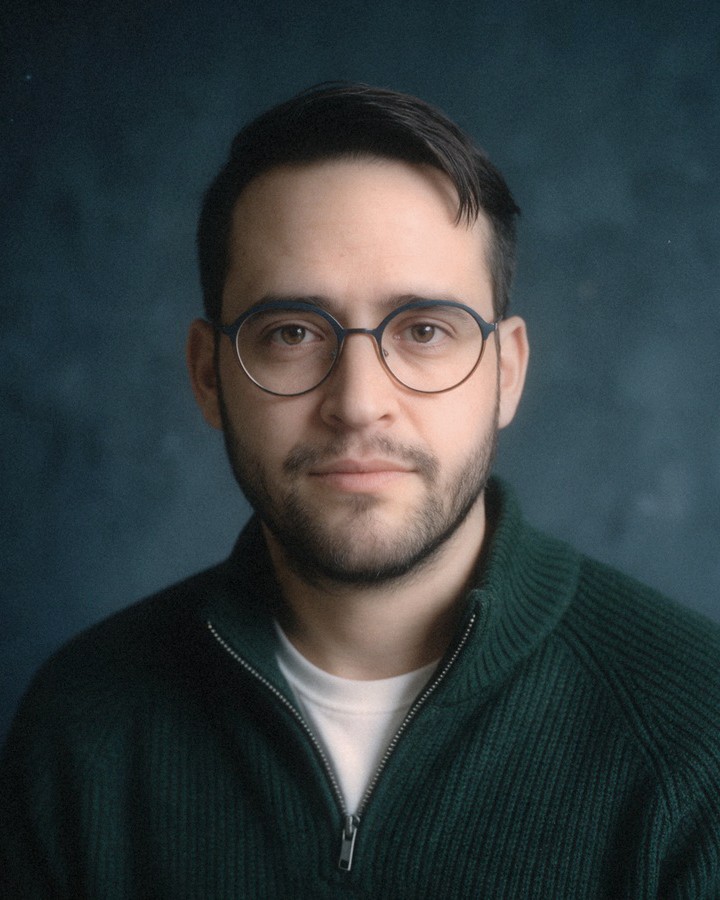
PHOTOREALISTIC TEXTURE DETAIL (mandatory): visible but tastefully retouched skin pores (NOT overprocessed, NOT airbrushed away), light entering and absorbing into the skin naturally with realistic subsurface scattering, HIGH-DEFINITION iris and eye detail (visible iris fibers, limbal ring, crisp catchlights, luminosity in the tear duct area), natural skin creases and folds appropriate to age and expression, clearly defined natural corners of the mouth and of the eyes, defined lip lines and natural lip creases with visible lip skin texture, slight natural frizz on hair at the edges and crown (real human hair, NOT slick-perfect), visible fabric and clothing weave texture (cotton grain, wool nap, silk sheen as applicable), natural micro-shadows on skin from pore depth giving 3D dimension to the face.
I do not shorten it.
The clause covers visible but retouched pores, natural light behavior in the skin, eye detail, age-appropriate creases, the corners of the mouth and eyes, lip texture, slight hair frizz, fabric weave, and the small shadows created by pore depth.
Done right, the skin is neither erased nor pushed into an overprocessed finish. The eyes contain defined iris information. The hair does not become slick-perfect. The clothing retains material texture.
But this clause comes fifth for a reason. It supports a defined person. It does not define that person by itself.
Sixth, identify the light source
Lighting needs a concrete source, direction, and color temperature.
A flat glow without an origin is not enough.
This is another place where surface detail can hide a structural problem. An image may look bright and polished, yet the light does not appear to come from anywhere. Without direction and contrast, the face can lose shape.
I state the source. I state its direction. I state the color temperature.
Done right, the light has a readable origin and real contrast. It does not sit evenly across the portrait as an unexplained glow.
If the light is flat, I fix the lighting instruction. I do not add another adjective to the skin.
Seventh, describe clothing as material
“Shirt” is not a sufficient material description.
I specify the fabric, its weight, its drape, how it moves, and how light enters or reflects from it.
That means clothing is reviewed as a physical material.
Cotton grain, wool nap, and silk sheen already appear in the texture clause as relevant examples. The wardrobe description should support the same material logic.
Done right, the clothing has a stated fabric behavior. It is not merely a named garment placed below a detailed face.
This also gives the portrait a consistent standard. Skin has texture. Hair has edge behavior. Clothing has weave, weight, and light response.
Eighth, compose the portrait
Composition includes the rule of thirds, depth, and balance.
I prefer asymmetry with an evident hierarchy.
I review where the subject sits, how depth is handled, and what carries the visual priority. A technically detailed face is not enough if the frame has no clear hierarchy.
Done right, the composition has balance without defaulting to empty symmetry. The viewer can tell what matters first.
This step comes after the earlier visual decisions because composition organizes the elements already defined. It does not replace framing, camera, identity, or light.
Ninth, decide what the person feels
The final decision is emotional tone.
I define this through state of mind, intention, and connection with the camera. This closes the portrait because it establishes what the person communicates, not only what the person looks like.
I do not leave emotion as a side effect.
Done right, the face has an intended state and relationship to the camera. The expression belongs to the portrait rather than appearing as an accidental variation.
The acceptance order
My review follows the same sequence as the prompt:
Framing and angle first.
Camera treatment second.
A distinguishing identifier third.
Facial architecture fourth.
Texture fifth.
Lighting sixth.
Clothing as material seventh.
Composition eighth.
Emotion ninth.
I never logged a monetary price for a render. The useful cost decision is whether the prompt is ready before another render is requested.
If the face lacks an identifier or structure, I do not spend that render testing more texture. I correct the earlier decisions first.
Today, take one portrait prompt and mark where it defines the identifier and facial structure. If neither is explicit, fix those sections before adding another skin adjective.
A method is what still works on the morning inspiration doesn't show up.